Serving Flagstaff, AZ and surrounding areas. (928) 326-9044
Slopes erode, old walls lean, and monsoon runoff goes where you do not want it. We build retaining walls anchored below the frost line with drainage built in - so the wall holds through Flagstaff winters and stays standing for decades.
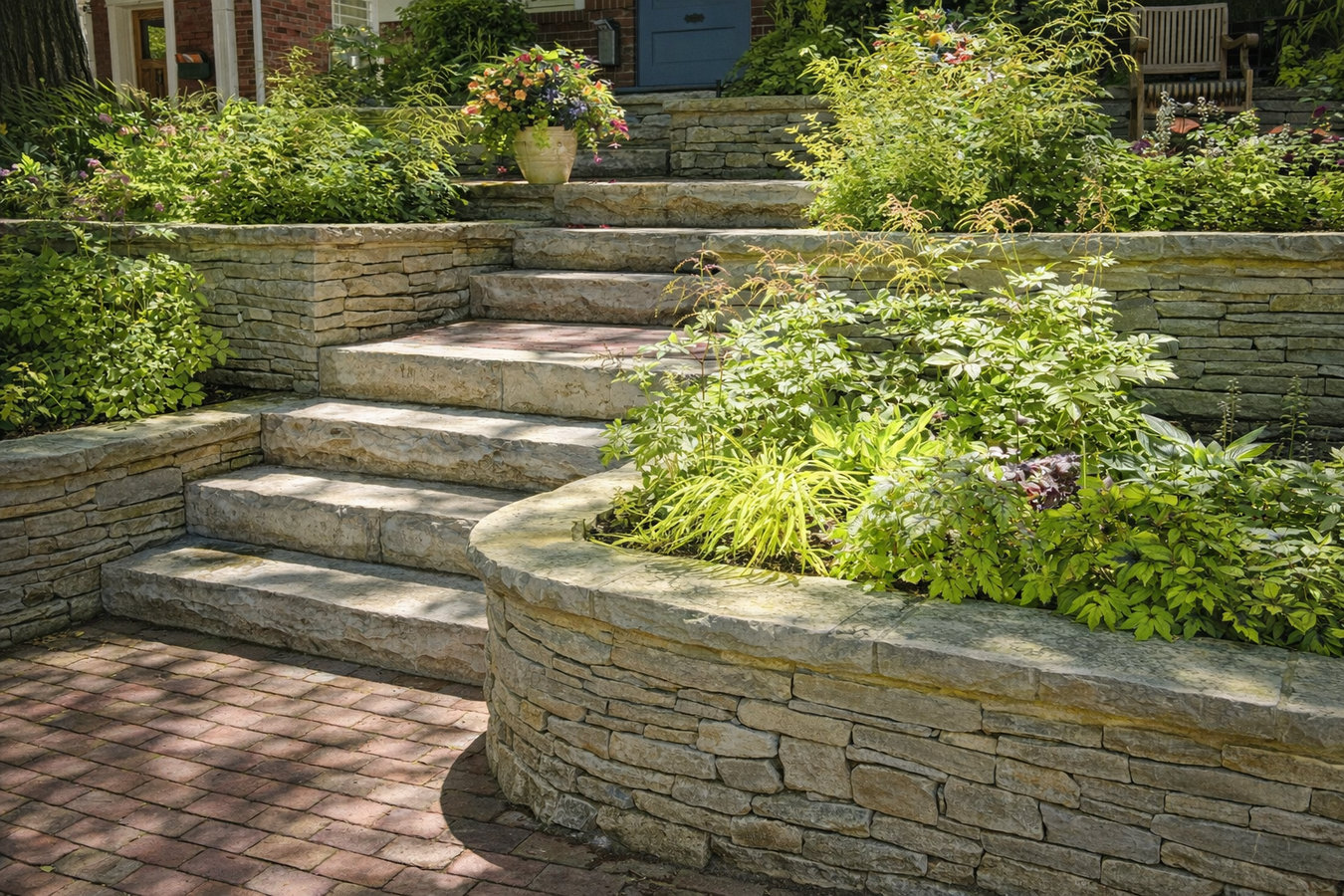
Retaining wall construction in Flagstaff means building a structural wall that holds back soil on a slope to stop erosion, redirect drainage, and create usable flat space - most small residential walls take two to four days to complete once permits are in hand, with longer timelines for taller or more complex structures.
Without a wall, a hillside or raised planting bed gradually collapses over time - especially here, where the combination of volcanic soil, heavy monsoon rains, and deep freeze-thaw winters accelerates movement that a lower-elevation property would take decades to experience. A retaining wall built for Flagstaff conditions is not the same as one built in Phoenix - the frost line is deeper, the soil is harder to excavate, and the drainage demands from monsoon season are more intense.
When a wall is failing rather than newly needed, the scope sometimes shifts from construction to repair. Our masonry restoration service covers walls and structures that need stabilization and rebuilding rather than full replacement.
If you notice dirt, gravel, or mulch collecting at the bottom of a slope after rain - especially during Flagstaff's summer monsoon season - that is erosion happening in real time. Left alone, it gradually undermines your landscaping, driveway, or the ground near your foundation. A retaining wall stops that movement before it becomes a larger structural problem.
A wall that has started to tilt forward or shows horizontal cracks across its face is under stress it was not designed to handle. This is especially common in Flagstaff with older walls that were not built deep enough to survive the freeze-thaw cycle. A leaning wall will not fix itself - it will continue to move until it fails, and the repair cost grows the longer you wait.
Standing water against your house or garage after a storm can mean a slope on your property is directing runoff toward the structure instead of away from it. A retaining wall, combined with proper grading, can redirect that flow and protect your foundation from long-term water damage - a real concern during Flagstaff monsoon season.
If part of your property drops away steeply and you cannot use that space, a retaining wall can turn it into a flat, usable area - a garden, a patio, or a level lawn. Many Flagstaff homes sit on hillside lots where this is a common situation, and a well-placed wall can genuinely change how much of your yard you enjoy.
We build retaining walls from natural stone, concrete block, and poured concrete - and the right choice depends on your slope angle, your budget, and what you want the finished wall to look like in the context of your yard. Natural stone suits Flagstaff's landscape particularly well because basalt and flagstone are native to the region and weather naturally over time. Concrete block works well for taller walls that need engineered anchoring. Poured concrete is the right call when maximum structural strength is the requirement and aesthetics are secondary.
If retaining wall construction is part of a broader outdoor project, we can coordinate with our other crews. For stabilized flat areas that benefit from hard-surface treatment, our masonry restoration team handles existing masonry on the same property. For new freestanding block structures - privacy walls, boundary walls, or utility enclosures - our concrete block walls service covers that scope separately.
Best for homeowners who want a wall that fits Flagstaff's landscape character, using basalt, flagstone, or stacked stone that blends with the surrounding terrain.
Suited for projects that need a clean, uniform appearance with engineered strength - particularly walls over four feet tall that require anchoring or tiered design.
Right for situations where maximum structural strength is the priority, such as walls on steep slopes or near property lines that require an engineer's review.
Ideal for sloped lots where a single tall wall is not practical - terracing breaks the slope into multiple shorter walls and creates usable flat areas at each level.
Flagstaff sits on the Colorado Plateau at nearly 7,000 feet, and much of the ground here is a mix of volcanic rock, basalt, and dense clay - harder to excavate than typical Arizona soil and with drainage characteristics that behave differently from softer ground. The frost line here is deeper than in Phoenix or Tucson, which means the base of a retaining wall has to go further down to stay stable through repeated freeze-thaw cycles. A wall built to Phoenix specifications in Flagstaff will start to lean within a few winters. The city averages more than 100 inches of snow per year and around 22 inches of rain - much of it in short, intense monsoon bursts from July through September. That concentrated moisture puts real pressure on retaining walls, and the drainage system built behind the wall is not optional - it is what determines whether the wall is still standing in five years.
We work across the region, including in Timberline-Fernwood and Mountainaire, where hillside lots are common and the combination of steep grades and rocky volcanic soil makes proper base preparation more critical than in flatter parts of the area. HOA design guidelines are also common in newer Flagstaff subdivisions - we can tell you which neighborhoods have restrictions before you choose a material.
The National Concrete Masonry Association publishes the industry standards for retaining wall design and construction that inform proper installation practices.
We ask a few basic questions about the size of the slope, what you are hoping to accomplish, and whether there is an existing wall involved. We schedule a time to come see the site in person - no honest contractor can price a Flagstaff retaining wall accurately from a photo. We reply within 1 business day.
We look at the slope, soil, access for equipment, and drainage. We discuss material options and appearance preferences with you. Within a few days you receive a written estimate that breaks down labor, materials, and any permit costs separately - not just a single total.
If your wall requires a permit, we submit the application to the City of Flagstaff on your behalf. Once permits are in hand, we mark the work area and excavate the base trench - through volcanic soil if needed - to the correct depth below the frost line.
We build the wall from the bottom up, level and plumb, with gravel backfill and a drainage pipe installed behind it. We clean up, backfill disturbed soil, and walk the finished wall with you before leaving. If a city inspection is required, we schedule and handle that too.
Free on-site estimate. Written quote before any work begins. Permit handled for you.
(928) 326-9044At nearly 7,000 feet, Flagstaff's frost line is significantly deeper than in most Arizona cities. We excavate to the correct depth on every wall we build, so the freeze-thaw cycle cannot push it out of the ground. This is the single most important factor in how long a wall lasts here, and it is not something to negotiate away.
Flagstaff averages around 22 inches of rain per year, and much of it falls during intense monsoon storms in July and August. We install gravel backfill and a drainage pipe behind every wall we build. Water has somewhere to go instead of building up pressure against the structure - which is why our walls still look the same in September as they did in May.
We submit the permit application to the City of Flagstaff, coordinate with Development Services, and schedule the city inspection when the work is done. You do not need to figure out the permit process. A wall that has been inspected and permitted is documented correctly for your property records - which matters when you sell.
Flagstaff's volcanic cinder and basalt soil requires heavier equipment and more careful excavation than typical Arizona ground. We have been doing this work in Flagstaff since 2018 and account for the local geology in every quote - no surprise cost increases once the shovel hits rock.
The two things that make or break a retaining wall - frost depth and drainage - are both invisible once the wall is finished. That is why track record and local experience matter more than price alone when choosing a contractor for this work in Flagstaff.
You can verify any Arizona contractor license through the Arizona Registrar of Contractors in about two minutes online.
If an older retaining wall or masonry structure needs to be repaired and stabilized rather than fully replaced, masonry restoration covers that scope of work.
Learn MoreFreestanding concrete block walls for property boundaries, privacy screens, or structural dividers built to the same frost-depth standards as our retaining walls.
Learn MoreCall or request a free estimate today. We visit the site, assess the slope and soil, and give you a written quote before any work begins.